
Prepared by: J’orge Garcia, Director, Windy City Bird Lab
September 2025
Introduction
One question that interviewers often ask bird advocates is, “Why? Why birds?” There might be no better city in the Nation than Chicago to explore this question.
Chicago sits at the heart of North America’s busiest migratory flyway, making it one of the most important urban landscapes for birds. Once known as the most dangerous city for migratory birds, Chicago has emerged as a leader in urban bird conservation, research, education, and community engagement.
It can be difficult to explain the joy and elation that comes from observing birds in urban environments. As author Jonathan Franzen noted, “Birds are our last readily available connection to the wilderness around us. They’re accessible without being ingratiating.” Beyond the personal gratitude hundreds of people get from birding every day, birds provide measurable economic benefits to all environments, including metropolitan areas like Chicago.
The city’s vibrant birding community spans diverse neighborhoods and demographics, supported by programs like the Urban Birding Festival, Chicago Bird Collision Monitors, Birds in My Neighborhood, and research projects like the Chicago Bird Migration Monitoring Network. These grassroots efforts demonstrate that birds are not merely an ecological amenity, but an economic asset that brings communities together while generating measurable value that is worthy of protection and investment.
Chicago currently lacks a comprehensive study establishing the annual dollar value of birds in its urban environment. This report highlights the various sources of economic value that birds provide to the city, the strategic advantage for Chicago to focus on bird conservation, as well as analogous studies in other urban environments, all demonstrating the opportunity for Chicago to pursue research in this area. A comprehensive study of the annual dollar value of birds in Chicago would empower city leaders, nonprofits, and businesses to make informed investments in conservation and urban planning.
Executive Summary
Chicago’s bird population generates substantial economic value through tourism attractions, ecosystem services, community engagement, and participation in the rapidly growing $107.6 billion national birding economy. The local birding community is vibrant and diverse, anchored by world-class locations such as Montrose Point, the most birded hotspot in the U.S., and a network of grassroots organizations, educational programs, and conservation initiatives.
Bottom line: By investing in bird habitat, infrastructure, and safety, Chicago can grow its share of the national birding economy while improving quality of life for its residents.
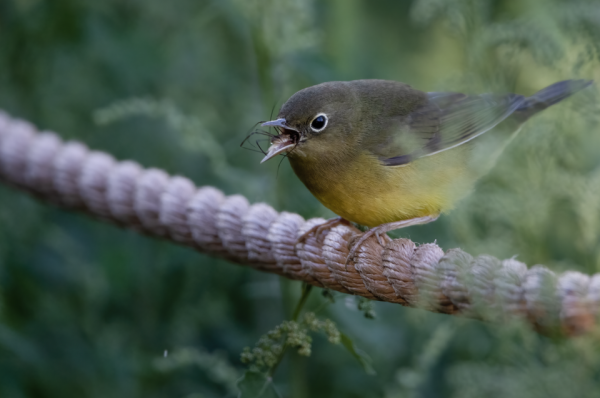
Photo of Connecticut Warbler taken at Montrose Point Bird Sanctuary by Matthew Dolkart